

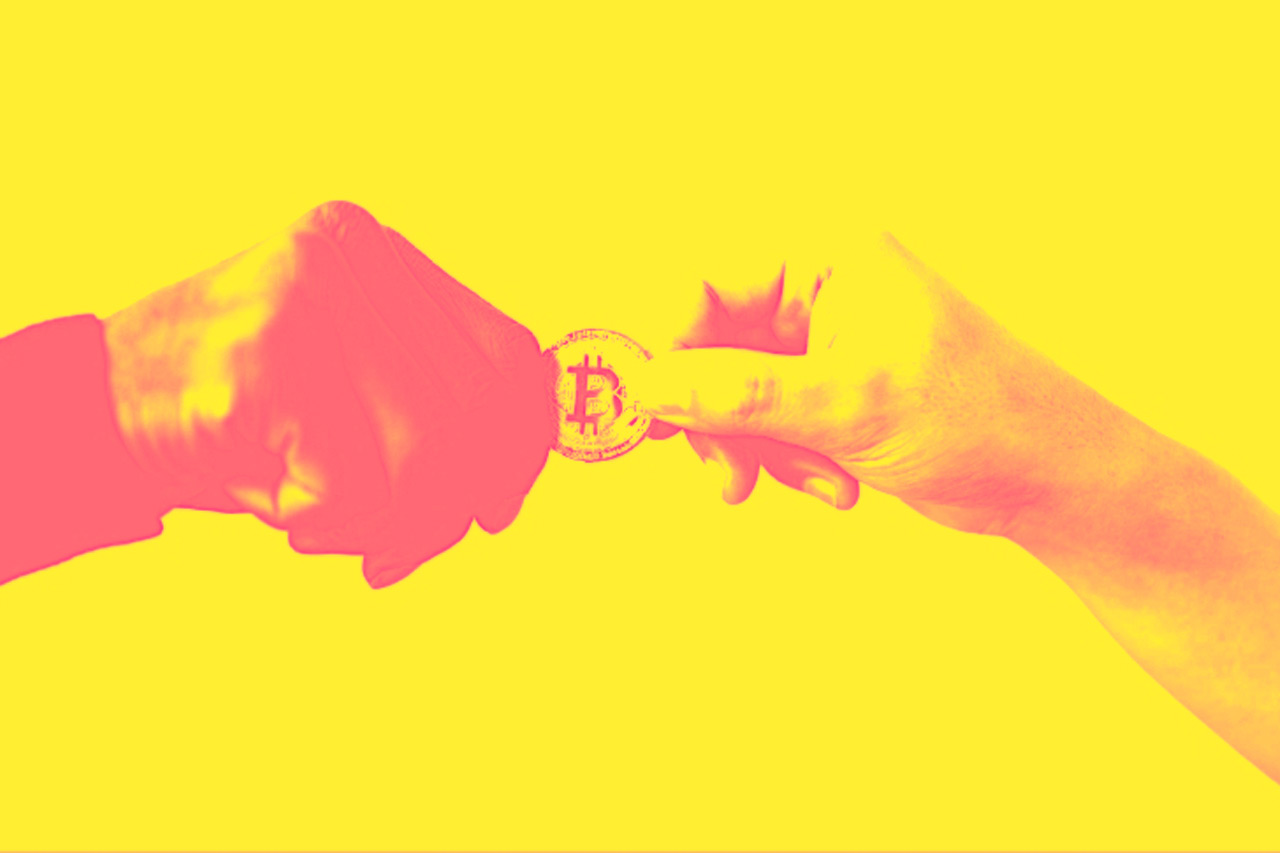
You can break free from banking hours with stablecoin payments that settle instantly across any timezone
Stablecoins have evolved from experimental tokens to a practical payment method. Their combined market value now exceeds $285 billion, with total transfer volume reaching $27.6 trillion in 2024—surpassing Visa and Mastercard’s combined transaction volumes.
Traditional payment infrastructures still experience a lot of issues. Remittances to harder-to-reach markets have hidden fees and spreads. Delays compound this friction: batch cut-offs, bank holidays and correspondent banking checks leave your capital idle for days.
Stablecoins change this equation completely. Settlements clear in minutes, operate around the clock and funds arrive without foreign-exchange mark-ups.
For payment operations, this means tighter cashflow control, reduced friction and costs and better movement of funds flexibility across borders.
What Is a Stablecoin?
A stablecoin is a type of cryptocurrency designed to maintain a stable price by being linked to an underlying asset, such as the US dollar, gold or other commodities.
Unlike more volatile cryptocurrencies like Bitcoin, stablecoins provide a stable store of value and offer a more reliable medium for transactions.
The peg works through three core mechanics: issuers hold reserves like cash and short-term government bonds, they mint tokens when you deposit collateral and burn them when you redeem and arbitrageurs buy discounted coins or sell overpriced ones until parity returns.
This price discipline turns these digital assets into a low-volatility bridge between traditional money and blockchain infrastructure. While Bitcoin can swing double-digits daily, dollar-pegged tokens trade within fractions of a cent of their target.
History and Evolution of Stablecoins
The evolution of stable digital currencies began with experimental attempts before arriving at today’s more robust version. The first attempt, BitUSD, launched in 2014 on BitShares but struggled to hold its peg amid crypto market swings.
Later that year, Tether (USDT) introduced the simple 1:1 fiat reserve model and quickly dominated exchange trading pairs. Institutional users demanded transparency, prompting Circle and Coinbase to release USD Coin (USDC) in 2018 with publicly attested reserves.
Over roughly a decade, the circulating supply jumped from virtually zero to nearly $300 billion. They now underpin the majority of on-chain transfer value worldwide.
Traditional Payment Rails vs. Stablecoins
The contrast between legacy payment systems and these blockchain-based alternatives reveals why finance teams are making the switch. Cross-border wires route through multiple correspondent banks, so funds arrive two to five days later and only during banking hours.
However, token transfers settle in minutes, regardless of time zone or public holidays.
Traditional providers layer fees and wide FX spreads, whereas blockchain fees are usually measured in cents. Every on-chain transaction is visible in real time while legacy rails leave you chasing reference numbers through intermediaries.
These digital assets introduce their own risks. You rely on issuers holding genuine reserves and smart contracts functioning as intended. Payment teams must still perform counterparty checks and monitor wallet addresses for sanctions, just as they screen traditional payees.
When weighed up, faster settlement, lower spreads and continuous availability often give stablecoins the edge for high-volume, multi-currency payouts—provided sound operational controls are in place.
Real-World Use Cases for Finance Teams
Digital dollar tokens solve everyday pain points for corporate finance departments:
- Supplier payments: Send USD-pegged tokens to international vendors outside banking hours, eliminating Monday wire queues and reducing FX spreads while providing instant settlement confirmation
- Global freelancer and contractor payouts: Replace costly remittance services with direct token transfers to remote workers worldwide, cutting transfer fees and delivery times from days to minutes across any time zone
- Short-term treasury management: Park surplus cash in tokenised T-bill funds overnight or over weekends, then redeem into fiat by the next business day with complete transaction visibility and enhanced liquidity forecasting through on-chain ledgers
- Marketplace seller settlements: Automate merchant earnings distribution through stablecoin payments that eliminate cross-border wire batches and chargeback delays, giving sellers 24/7 access to funds and reducing operational overhead
- Programmable escrow and milestone payments: Deploy smart contracts that automatically release funds when goods clear customs or project deliverables are met, reducing manual oversight while providing audit-ready transparency for complex multi-party transactions
- ERP system integration: Connect existing accounting workflows with blockchain settlement through API integrations that provide instant confirmation of fund movements, improving cash flow forecasting without requiring payments infrastructure replacement
Five Types of Stablecoins and How They Work
There are hundreds of different kinds of stablecoins today, each balancing stability, liquidity and autonomy in distinct ways. You’ll see designs that hold cash in bank accounts, others that lock crypto in smart contracts and some that rely purely on code to expand or shrink supply.
Understanding these mechanics lets you match the right coin to a payment flow or treasury policy and judge the trade-offs before moving real money on-chain.
Fiat-Backed Stablecoins
Fiat-backed coins keep one token equal to one unit of currency by holding matching reserves in cash or short-dated government bills. When you redeem a coin, the issuer burns your token and wires the same amount of fiat from its reserve.
USDC and USDT dominate this segment, offering deep liquidity and straightforward accounting.
Their popularity stems from transparency rules that require regular attestations. Under the GENIUS Act, they need full bankruptcy-remote reserves. Day-to-day price swings are tiny, making these coins fit for cross-border supplier payouts, instant payroll or sweeping idle balances between bank and exchange accounts.
The model has flaws. March 2023’s USDC de-peg showed how quickly banking stress can spill over. You also accept counterparty risk—if the custodian fails, redemption could freeze. Even so, fiat-backed tokens remain the most trusted option for operational payments.
Commodity-Backed Stablecoins
Commodity-backed designs peg each token to a fixed quantity of a hard asset, most often gold. PAXG represents one fine troy ounce stored in a London vault and trades on major exchanges just like any ERC-20 coin.
You gain digital ownership of bullion without shipping, assay or storage headaches. You can settle trades around the clock.
Treasury teams in inflation-prone markets sometimes park surplus cash here as an alternative to holding foreign currency. Redemption involves logistics and fees, on-chain liquidity is thinner than dollar coins and you still rely on the custodian to safeguard bars.
Crypto-Backed Stablecoins
Crypto-collateralised coins such as DAI stay on-chain from end to end. You lock more value in crypto than you mint in stable tokens—deposit 150 USDC-equivalent of ETH and borrow 100 DAI. If ETH falls and your collateral ratio breaches a threshold, smart contracts liquidate positions to protect the peg.
This over-collateralisation raises confidence in turbulent markets and strips away dependency on banks. It also ties up capital and exposes you to volatile collateral. A sudden 40% dip in ETH can trigger forced sales and momentary peg wobbles.
The draw is decentralisation: no issuer can freeze funds and the coin runs wherever Ethereum does. That makes DAI useful for programme-driven treasury moves inside DeFi or for paying contractors who prefer a censorship-resistant asset.
Corporate treasury teams also use these systems to earn yield on surplus cash while maintaining liquidity access. Finance teams can deposit corporate bonds or trade receivables as collateral, mint stable tokens against them and deploy those tokens for operational payments or short-term investments.
This approach generates working capital without selling appreciated assets, though you must monitor collateral ratios closely and maintain adequate reserves to prevent liquidation during volatile periods.
Algorithmic Stablecoins
Algorithmic coins try to hold their peg with no explicit collateral. Smart contracts mint tokens when the price rises above the target and burn or incentivise redemptions when the price falls. Because these designs rely entirely on market psychology, regulators view them sceptically.
Several jurisdictions are moving to restrict uncollateralised models. For corporate treasuries, the risk-return balance rarely makes sense—even brief de-pegs can disrupt margins on a large invoice.
Treasury- or Government-Bond-Backed Stablecoins
A newer class backs each token with short-dated sovereign bills rather than cash deposits. The instruments sit in custodial accounts, accrue yield and, in many structures, flow that yield back to holders.
By holding Treasury bills instead of bank deposits, issuers cut bank failure exposure and tap the same assets central banks treat as cash equivalents.
There are two advantages: a stable dollar unit for payments and a modest return that outperforms zero-interest bank current accounts. The flipside is interest-rate sensitivity—if bill prices drop sharply, reserve values can slip below face until maturity.
Liquidity is also thinner than in pure fiat coins, so large redemptions might take a business day.
For finance teams parking working capital over weekends or seeking low-risk yield between pay runs, bond-backed coins offer an attractive middle ground.
Stablecoin Policies and Regulations Around the World
Regulators worldwide are racing to fit digital stable currencies into existing financial law You now face a moving target: rules differ by country, change quickly and often overlap with broader payments regulation.
Staying ahead means tracking how each regime balances consumer protection with economic opportunity. You’ll need to adjust your treasury or payment flows accordingly.
United States
Washington replaced its patchwork of state licences with the federal GENIUS Act, signed in July 2025. Only three types of issuers may now offer “payment stablecoins”: OCC-supervised banks, non-banks that obtain a federal charter or foreign firms recognised as equivalent by the new Stablecoin Certification Review Committee (SCRC).
Reserves must be held one-to-one in high-quality liquid assets and kept bankruptcy-remote. Audits and monthly disclosures are mandatory.
State-regulated coins may continue until their circulation tops 10 billion USD, at which point they must move to federal oversight. Issuing an unregistered coin now carries fines up to 1 million USD and prison sentences of five years.
What this means for you: only federally recognised coins will stay liquid on major exchanges and banking rails. Before holding or paying with a US-denominated token, confirm the issuer’s path to GENIUS compliance and build redemption contingencies into treasury policy.
European Union – MiCA
Europe’s Markets in Crypto-Assets Regulation (MiCA) divides digital stable currencies into e-money tokens (EMTs) and asset-referenced tokens (ARTs). Issuers must be a credit institution or authorised e-money firm, publish a white paper and maintain fully segregated, liquid reserves redeemable at par.
The European Banking Authority directly supervises coins above set size thresholds while smaller projects answer to national regulators. Daily transaction caps—200 million EUR for some ARTs—give supervisors a brake if systemic risk grows.
For you, MiCA offers passporting: once an issuer gains approval in one member state, you can use that coin across the entire bloc with identical consumer rights and redemption timelines. Plan for new reporting fields in your payment flows—issuer disclosures and reserve attestations will become standard audit items.
United Kingdom
Post-Brexit, the UK is carving its own path. Amendments under the Financial Services and Markets Act brought fiat-linked tokens inside the regulatory perimeter. The FCA will authorise day-to-day issuers while the Bank of England will oversee “systemic” coins that could threaten financial stability.
Designated coins will be treated like recognised payment systems, attracting prudential standards similar to those applied to Faster Payments operators. Consultations running through 2025 suggest capital, custody and orderly wind-down requirements mirroring electronic-money rules.
If you settle sterling liabilities with these digital assets, expect dual oversight: FCA conduct rules on issuance and BoE operational standards on the network itself. Align your compliance checks with the final BoE designation list—using a non-designated coin for high-value flows could invite supervisory questions.
Asia-Pacific (Singapore, Hong Kong, Japan)
Regulation across the Asia-Pacific is diverse but trending toward strict licensing. Singapore’s MAS framework covers single-currency tokens pegged to the SGD or G10 currencies once circulation tops 5 million SGD.
Coins must be fully backed, bankruptcy-remote and redeemable within five days. Only MAS-licensed issuers may market themselves as “regulated”.
In Hong Kong, rules restrict issuance to locally incorporated licensees with full reserves held onshore, closing the door to most offshore coins. Japan amended its Payment Services Act so that only banks, trust companies or licensed money transmitters may issue these digital assets.
Overseas coins can circulate only through registered distributors and must meet equivalent reserve tests.
For cross-border payouts, check whether the coin you use is on the local regulator’s “green list”. A MAS-certified USD coin clears corporate treasury hurdles in Singapore but might fail eligibility in Hong Kong without a local entity.
Build regional wallets so you can switch denominations quickly when one jurisdiction tightens rules.
Middle East
Dubai’s VARA proposed explicit guidance for stable digital currencies, tying licence tiers to reserve quality and mandatory on-chain transparency. Bahrain continues to rely on its regulatory sandbox, giving issuers a probationary window but still demanding full, audited backing.
At the global level, the Financial Stability Board and IOSCO published recommendations in 2023 that call for one-to-one reserves, clear redemption rights and robust governance principles that many national frameworks now echo.
If your payment corridors touch multiple continents, anchor policy to these high-level standards first. Local rules then become variations on a theme rather than separate compliance projects. Establish a minimum reserve audit cadence, incorporate issuer governance reviews into vendor due diligence and keep an eye on model clauses that reference FSB guidance.
Doing so will help you adapt quickly as more countries formalise their own rulebooks.
How to Prepare Payment Infrastructure for Stablecoin Integration
Adding these digital assets to your payment stack is a strategic upgrade.. You need the right network connections, robust compliance safeguards and real-time visibility over balances that can move at blockchain speed.
The following strategies break down the core workstreams you should line up before the first token leaves your wallet.
Assess Your Current Technical Readiness
Start by mapping every system that touches money today. Your payment gateway, ERP, treasury workstation and reconciliation tools each need a clear hand-off point for token data. Trace the full journey from payment instruction to ledger entry and highlight any batch processes that might lag behind near-instant blockchain settlement.
Choose networks early. Ethereum offers deep liquidity but higher fees, Solana trades cost for speed and a multi-chain set-up gives you routing flexibility when one network is congested. Token transfers regularly settle in seconds, so your systems must post transactions in near real time.
Gauge your team’s fluency with private keys, gas fees and smart-contract risk. If knowledge gaps appear, lock in targeted training before integration kicks off.
Run a security review that treats wallet infrastructure with the same rigour you apply to cardholder data—cold-storage policies, multi-sig approvals and continuous monitoring should all feature in your checklist.
Address Compliance and Risk Management
These assets live on transparent ledgers, but that doesn’t automatically satisfy regulators. Build a compliance playbook covering four pillars:
- Screening comes first—pair traditional sanction lists with blockchain analytics to flag addresses linked to ransomware or fraud
- Holding limits follow—define caps by token, counterparty and geography. Reserves that breach thresholds can trigger automatic conversion back to fiat.
- Audit trails matter equally. Record on-chain transaction hashes inside your ERP so external auditors can reconcile balances quickly.
- Incident response planning closes the loop. Simulate a smart-contract bug or a peg wobble—USDC’s brief de-peg in 2023 offers a timely lesson. Agree in advance who freezes transfers, who communicates with counterparties and how you restore funds if redemption queues form.
Training rounds out the programme. Every operator handling approvals should understand the distinction between a confirmed block and final settlement to prevent accidental double-spending.
Build Liquidity Management Systems
Blockchain settlement is always on, so idle balances can spike at awkward hours. Calculate the float you need for routine payouts and hold the rest in interest-bearing instruments or short-dated T-bills rather than parking excess tokens on a hot wallet.
Set up dashboards that pull wallet balances, pending transfers and network gas costs into one view. Trigger alerts when balances hit re-order points or when network fees balloon during peak congestion.
Two redemption routes work better than one—establish access via an exchange and an OTC desk so you can swap into fiat even if an order book dries up.
Finally, add approval workflows that mirror your existing payment policies: dual control for amounts over a set threshold and real-time notifications to treasury when large redemptions settle.
Partner With an Acquirer that also Supports Stablecoins
Running parallel systems across multiple processors creates reconciliation headaches. A direct acquirer, like Rapyd, lets you unify authorisation, settlement and funding into one relationship.
Direct acquiring relationships provide superior authorisation rates compared to processor arrangements—critical when every false decline represents lost revenue.
When evaluating payment infrastructure partners, prioritise:
- Settlement speed consistency
- Unified reporting across payment methods
- Operational reliability during high-volume periods
- Support for a variety of payment methods, including stablecoins
Consider providers who can support both traditional card processing and emerging payment technologies, like stablecoins, as they develop.
Build these requirements into your evaluations from the start. When a single partner can provide consistent funding seven days a week across multiple currencies and payment methods, you replace operational complexity with predictable cash flow and streamlined reconciliation.



Subscribe Via Email
Thank You!
You’ve Been Subscribed.