

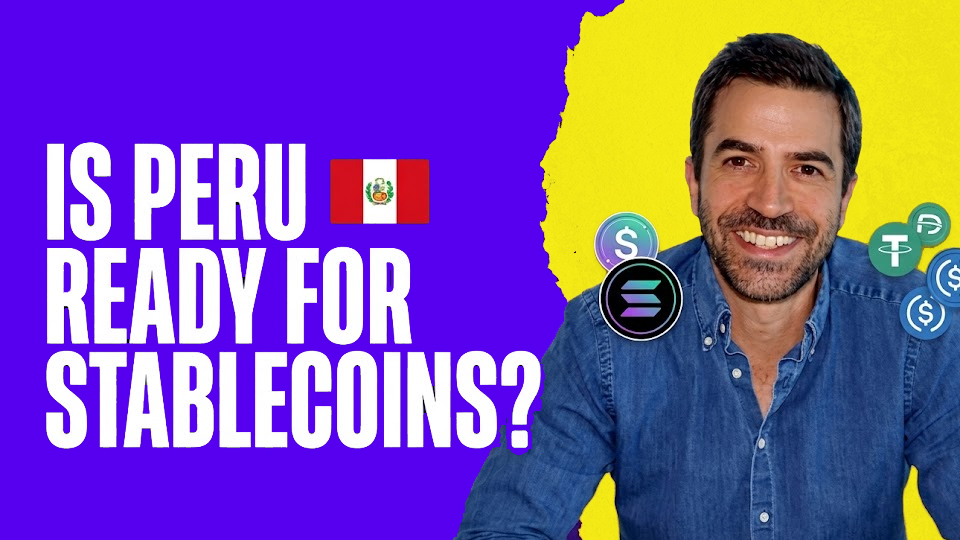
Is Peru Ready for Stablecoins? Rapyd’s William Nejo on Computer Weekly
Rapyd’s VP of Transformation tells Computer Weekly en Español that Peru has the digital payments base for stablecoins, and that the next step is moving them from the consumer’s pocket to the company treasury
Computer Weekly en Español, the Spanish-language edition of the technology publication, has published a feature with Rapyd’s VP of Transformation William Nejo on the stablecoin opportunity in Peru.
Read the article on Spanish in Computer Weekly en Español
Peru moves money digitally more than most of Latin America. So why aren’t more Peruvian businesses using stablecoins? According to William, our VP of Transformation, the base is already there. What’s missing is the step from consumer habit to company treasury.
Peru has the digital muscle
William points out that Peru ranks third in Latin America for digital payments adoption, behind Brazil and Chile, and second when measured against the banked population. Wallets such as Yape and Plin drove financial inclusion at scale, and more than a million Peruvians now operate with digital assets, double the number from two years ago.
“The digital muscle already exists,” he says. “The gap is in taking that from the consumer’s pocket to the company treasury.”
Three things businesses need
William names three conditions for stablecoin payments to work for companies:
- Clear rules that give a board certainty
- Integration with the systems companies already use, including conversion of payments to local currency
- Practical uses for paying, getting paid and settling across borders
Our own research points the same way. The State of Stablecoins report found that 64% of businesses use stablecoins or plan to within three years, and that they use them for the essentials: making payments, receiving payments and settling across borders, not trading.
His test for maturity is simple. “The day we stop saying ‘stablecoin payment’ and just say ‘payment’ is the day maturity arrives,” he says. “Just as today nobody says ‘I’ll send you an email over the internet.'”
What it means for Peruvian exporters and SMEs
Peruvian exports grew 37% in the first months of the year, according to William. That foreign trade is exactly the flow where stablecoins add the most value.
The reason is time. An SME in Lima or Bogotá competes with what William calls an invisible disadvantage: its money moves slower and costs more than the money of a buyer or competitor in Miami or London. Getting paid sooner frees working capital to pay suppliers, restock or choose when to convert funds to local currency. “That freed-up working capital is real money,” he says.
Banks aren’t going anywhere
William expects the most pressure to fall on correspondent banking, the chain of intermediaries that many international transfers pass through today. He doesn’t see banks disappearing. Someone still has to hold reserves, issue, comply with regulation and connect to local currency. He notes that the big players have already moved: Visa multiplied its stablecoin settlement fifteen times in a year and now exceeds $20 billion annualised. “The business doesn’t disappear,” he says. “It gets redistributed.”
Trust stays, waiting goes
The part of William’s answer we like best is about what changes and what doesn’t. Compliance, identity verification, risk management and licensing stay indispensable, and they become more important as payments get faster. What disappears is the wait: the days of delay, the chain of intermediary banks and the banking hours.
“Stablecoins will be like fibre optic. Nobody sees it, but everything runs on it.”
That’s the idea behind the way we build at Rapyd. We manage the compliance, rails and settlement so you can accept, send and settle in stablecoins from one provider, in stablecoin, fiat or both. It runs 24/7/365 and reaches 190+ countries. Explore Rapyd’s stablecoin payment solutions.
Get the numbers behind the conversation
The research William references comes from The State of Stablecoins, a global survey of businesses across ecommerce, iGaming, financial services, digital goods and crypto, spanning APAC, the Americas and EMEA. Inside you’ll find adoption rates by company size, the top benefits businesses report and the barriers that hold them back, led by regulatory uncertainty.
Download the State of Stablecoins report
Interview originally published in Spanish by Computer Weekly en Español on 25 September 2026, by Víctor Pipa Valladolid. Quotes have been translated into English by Rapyd.